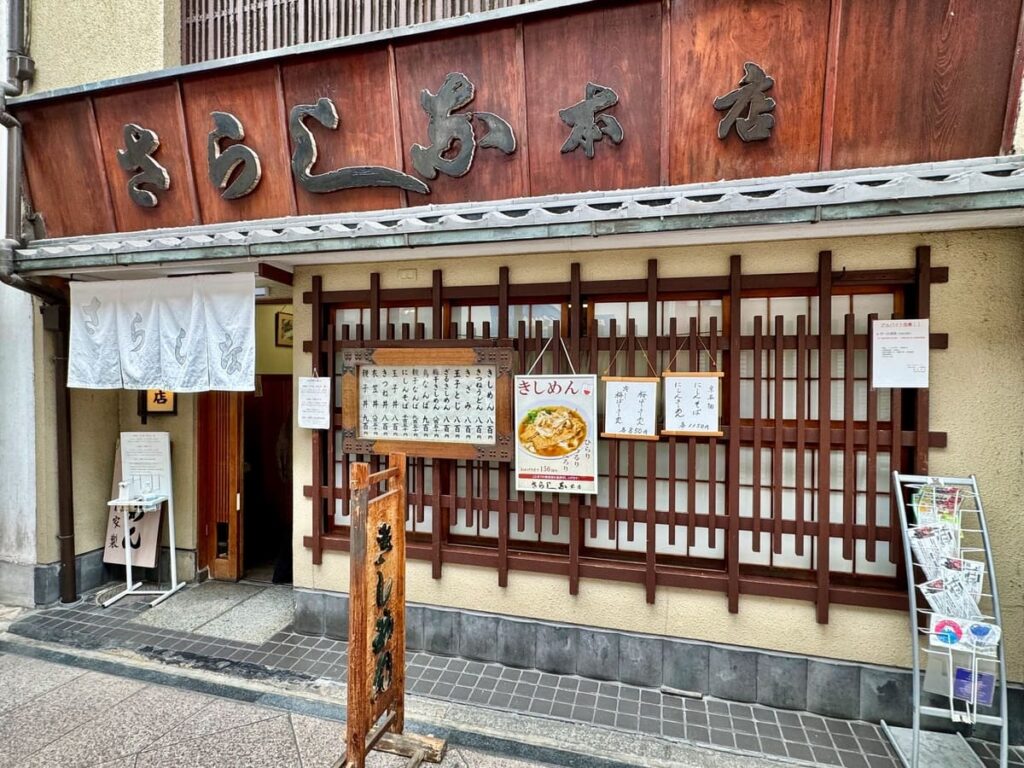
When I was in elementary school, I went through a phase where I was obsessed with kishimen noodles. I remember always ordering kishimen at the udon restaurant my parents took me to. However, at some point, I suddenly stopped eating it (not because I got tired of it or anything…), and since then, even as an adult, I haven’t gone out of my way to eat kishimen. So, it had been over 10 years since I last had kishimen, but one afternoon, as I passed by this shop, I suddenly felt like trying kishimen again, so I went into the Sarashina Head Shop on Shin-Kyogoku Street. While “Sarashina” is strongly associated with soba, this restaurant is actually famous for its kishimen…
Actually, it’s quite popular with foreign tourists… Sarashina Head Shop is this kind of restaurant
Sarashina Head Shop was founded in 1874, making it one of Kyoto’s oldest restaurants with a history spanning 150 years. The founder was from Nagoya, and from the beginning, the restaurant has sold soba, udon, and kishimen noodles. However, it seems that it took a long time for kishimen noodles to be accepted in Kyoto. The current owner is the sixth generation, but it was the previous fifth generation who decided to focus on kishimen noodles, which led to the current image of Sarashina Head Shop as a kishimen noodle restaurant.
The restaurant is housed in an old wooden building that exudes a sense of history, and when you step inside, you feel as if you have traveled back in time. Perhaps due to its retro Japanese atmosphere, the shop is actually quite popular among foreign travelers, and it’s not uncommon to see a crowd gathered outside waiting to enter. The shop has a total of 32 seats, including table seats and raised tatami-mat seats. The aroma of dashi broth gently wafts through the store, making the waiting time after placing your order an enjoyable experience…
It’s different from my image of kishimen noodles… How was the signature dish at Sarashina Head Shop, kishimen noodles?
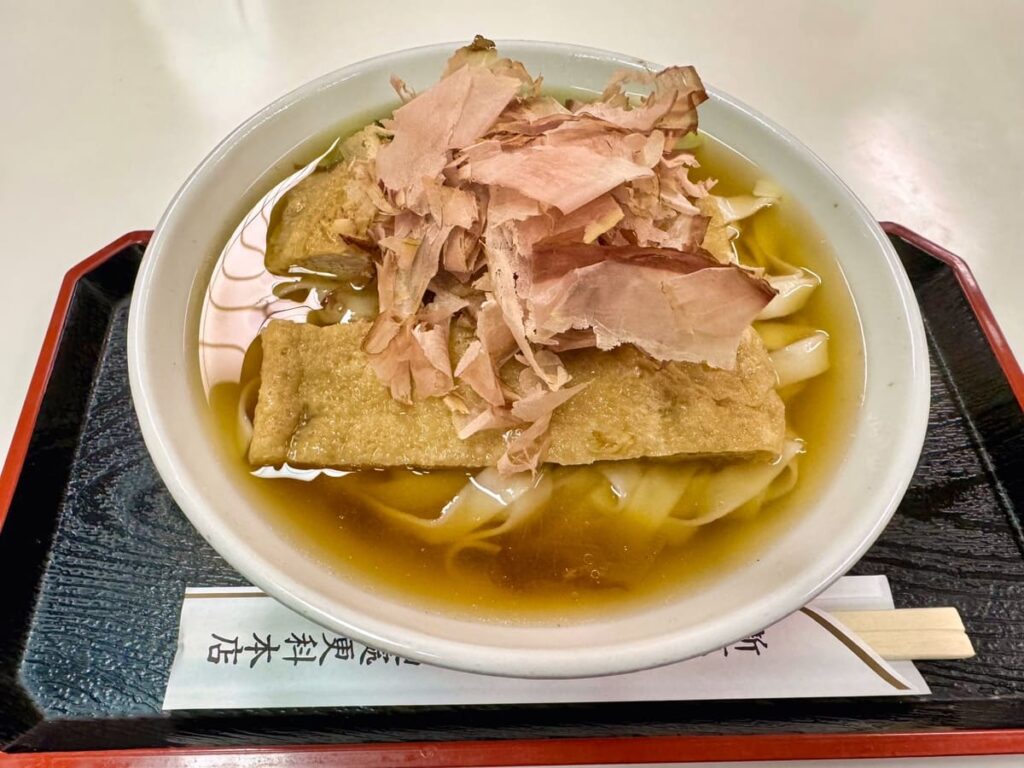
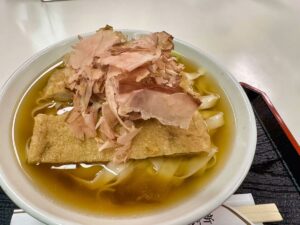
Now, let me introduce the signature dish I ordered at Sarashina Head Shop that day, kishimen noodles (can be changed to udon or soba, price: 800 yen including tax). After waiting about 10 minutes after ordering, the kishimen noodles were brought to my table…

The aroma of bonito flakes wafted gently from the small bowl that fit in one hand. The toppings included two thinly sliced pieces of fried tofu, flower-shaped bonito flakes, and Kyōto negi (green onions), but the amount of negi was significantly less than the other two. Was this due to rising prices, or was there another reason?

Well, setting that aside, let’s pull the noodles out of the bowl… Contrary to my expectations, the noodles were extremely thin, about 1 cm wide, and fluttered lightly. “I thought Nagoya kishimen noodles were supposed to have a more substantial texture…” I thought to myself as I ate, but the noodles had a smooth, silky texture, and despite their thinness, they had a satisfying bite when chewed. What surprised me personally was that even though the noodles were extremely thin, they didn’t break when I pulled them with chopsticks but stayed firmly attached. I intuitively felt that “there must be some amazing ingenuity behind these noodles.”
As for the broth, it has a transparent appearance typical of Kansai-style broth, but the flavor is quite strong. The dashi made from shaved bonito flakes is also well-balanced, and there’s no bitterness at all. It’s simple yet rich in flavor, if you will… This is also different from the image of kishimen noodles I had as a child. Both the noodles and the broth have been adapted for Kyoto residents, but it works perfectly.

The fried tofu topping also surprised me. At first, I didn’t notice it, but by the end, it had absorbed the broth and become incredibly thick. The thickness easily exceeded 1 cm. It was so thick that it felt like eating a steak. The sweet and spicy broth oozes out from inside, making me feel happy. This fried tofu might be the best in Ohori history.

This is the kishimen at Sarashina Head Shop, but there’s one more surprise at the end. The bowl is small, but it’s packed with noodles. I didn’t specifically order a large portion, but I think there was about 1.5 servings of noodles, which is equivalent to a regular ramen portion. So, if you can finish this kishimen, you’ll be fully satisfied. This bowl costs just 800 yen including tax, which feels like a lifesaver in these times of rising prices.
Other menu items at Sarashina Head Shop (prices include tax)
- Nishin Soba (herring noodles) 1,150 yen
- Oyako Namba (chicken and egg noodles) 950 yen
- Kinugasa Don (rice bowl with fried tofu) 850 yen
- Zaru Kishimen (cold noodles) 800 yen
- Kitsune Udon (noodles with fried tofu) 800 yen
Take-out kishimen noodles are also available… Access to Sarashina Head Shop is a 5-minute walk from Kyoto City Hall Station on the Kyoto Municipal Subway.
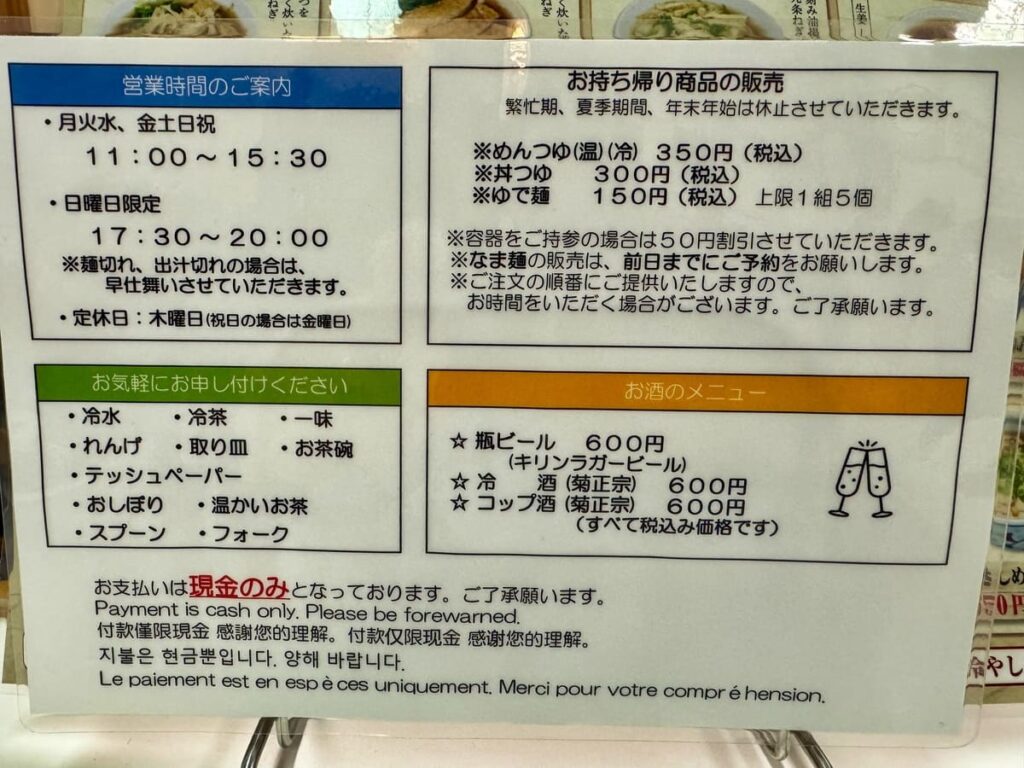
Sarashina Head Shop also sells take-out kishimen noodles…

Mentsuyu (noodle soup) is 350 yen per bottle, and boiled noodles are 150 yen per pack (both tax included), so taking them home is much more affordable than eating in the restaurant. If you bring your own container, you can get an additional 50 yen discount. If you take full advantage of these discounts, you can eat kishimen for about half the price of eating in the restaurant. If you can eat so affordably, you should definitely take advantage of it when you are nearby.
Here are the store details…

Sarashina Head Shop Out of 5
Address: 483 Nakasuji-cho, Nakagyo-ku, Kyoto-shi, Kyoto 604-8047
Phone number: 075-221-3064
Business hours: 11:00 a.m. to 3:30 p.m. (Sunday only: 5:30 p.m. to 8:00 p.m. also available)
Closed: Thursdays
Parking: None
Credit cards: Not accepted (cash only)
P.S. If you are looking for delicious Japanese noodles in Kyoto, please stop by this article below…


Leave a Reply